Hello, this is MoxaZen.
Calf swelling can be really uncomfortable, can’t it? By the evening, do your legs feel tight, painful, heavy, and sluggish, with cold feet on top of it all? Many people want to try moxibustion but feel unsure about which acupoints to use or how to apply it properly around the ankles and lower legs. In this article, I’ll walk you through easy self-care methods you can do at home, along with simple ways to locate the right points. By incorporating just a little time into your daily routine, you may start to notice your legs feeling lighter and more comfortable.
- The root causes and mechanism behind calf swelling
- Why moxibustion may help improve blood and lymph circulation
- Specific acupoints where you’re most likely to feel the benefits
- Important safety tips for enjoying moxibustion at home
[Disclaimer: Please Read / Medical Disclaimer]
The information in this article regarding moxibustion and acupoints is intended solely for general wellness and informational purposes and is not a substitute for professional medical diagnosis, advice, or treatment.
Any self-care you practice at home is done entirely at your own risk. This site cannot be held responsible for any burns, physical discomfort, or other issues that may occur after trying these methods.
If you have a chronic medical condition, are pregnant, or experience unusual symptoms such as sudden leg swelling or shortness of breath, please do not rely on self-diagnosis and be sure to consult a qualified medical professional in advance.
- Basic Knowledge About Using Moxibustion for Calf Swelling
- Practical Ways to Use Moxibustion for Calf Swelling
- Acupoints for Swelling Relief and How to Find Them
- Safe At-Home Moxibustion: Method and Steps
- Is Daily Moxibustion Too Much? Proper Frequency and Timing
- Avoiding Marks from Moxibustion: What to Do If It Feels Too Hot
- Combining Moxibustion and Massage for Better Swelling Relief
- Improve Calf Swelling at the Root with Daily Moxibustion
Basic Knowledge About Using Moxibustion for Calf Swelling
Calf swelling is not just a sign of fatigue. It can also indicate that circulation in the body is not flowing smoothly. Here, I’ll first explain why your legs become swollen and tight, and how moxibustion may help address the problem.
What Causes Calf Swelling?
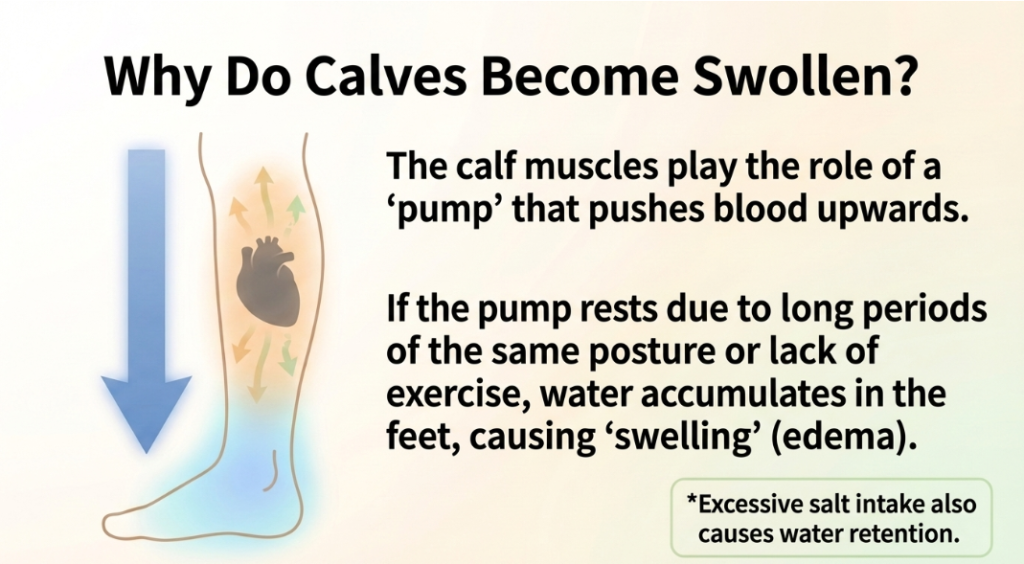
You may have heard the calf muscles referred to as the “second heart.” Blood is pumped from the heart down to the feet, but then it has to travel back upward against gravity. The calf muscles act like a pump, helping push that blood back up toward the heart.
When you sit or stand in the same position for long periods, such as during desk work, or when you don’t get enough exercise, this pumping action of the calf muscles doesn’t work as efficiently. As a result, blood, lymph, and other fluids can pool in the lower legs, leading to what we know as swelling (edema).
A Helpful Tip
Too much salt is also a major factor. When sodium levels in the body rise, the body tends to retain more water in order to restore balance, which can make swelling even worse.
The Effects of Moxibustion on Calf Swelling
Moxibustion is a very logical approach for legs that feel swollen and tight. When its warming stimulation reaches deep beneath the skin, the body is said to respond by releasing substances that help dilate the blood vessels.
This may improve circulation in the tiny blood vessels and lymphatic flow, helping the body more easily clear away excess fluid that has built up. One of the wonderful things about moxibustion is that it does more than simply warm the surface—it may also encourage the body’s internal systems to function more smoothly.
How Moxibustion May Help Improve Both Swelling and Coldness

In fact, swelling and “coldness” are closely connected. In traditional East Asian medicine, poor fluid circulation in the body is sometimes referred to as “suītai” (fluid stagnation).
When excess fluid accumulates in the lower legs, it can draw heat away from the area and make the feet feel cold. Then, as the area becomes colder, blood flow worsens further, causing even more fluid to collect. This creates a vicious cycle. The gentle warmth of moxibustion can help interrupt this cycle and support overall balance in the body.
Possible Medical Risks Behind Calf Swelling
Swelling caused by fatigue or long hours of standing can often be addressed with self-care, but in some cases it may be a sign that requires medical attention.
Important Warning Signs
If your leg suddenly becomes swollen, if you have shortness of breath, or if only one leg is unusually swollen, there may be an underlying condition involving the heart, kidneys, or veins, such as deep vein thrombosis (DVT). Information and general numerical guidance found online are only rough references, so please do not self-diagnose. Be sure to seek medical attention promptly.
Because this concerns your health and safety, always consult a qualified professional for final judgment and care.
Practical Ways to Use Moxibustion for Calf Swelling
Now that we’ve covered the basics, let’s move on to the practical side. I’ll explain where to apply moxibustion, how to find the right points, and the safest step-by-step method you can start using today.
Acupoints for Swelling Relief and How to Find Them
There are several excellent acupoints around the calves that may support fluid circulation and ease heaviness in the legs. I’ve summarized their locations and characteristics in the table below.
| Acupoint Name | Location and How to Find It | Expected Benefits |
|---|---|---|
| Chengshan (BL57) | In the center of the calf, in the hollow that appears where the muscle forms a V-shape when you stand on tiptoe. | Relaxes tight calf muscles and strongly supports swelling relief. Also helpful for preventing calf cramps. |
| Sanyinjiao (SP6) | On the inner lower leg, four finger-widths above the highest point of the inner ankle bone, along the edge of the tibia. | Supports fluid metabolism and helps with coldness. Also often recommended for women’s health concerns. |
| Yinlingquan (SP9) | Trace upward along the inner side of the shin until your finger stops in the hollow below the curve of the knee. | Helps support the elimination of excess fluid from the body. |
| Zusanli (ST36) | Four finger-widths below the outer side of the kneecap, about one finger-width to the outside of the shinbone. | A versatile point that supports digestion, nourishes overall energy and blood flow, and helps relieve leg fatigue. |
Tip for Finding Acupoints
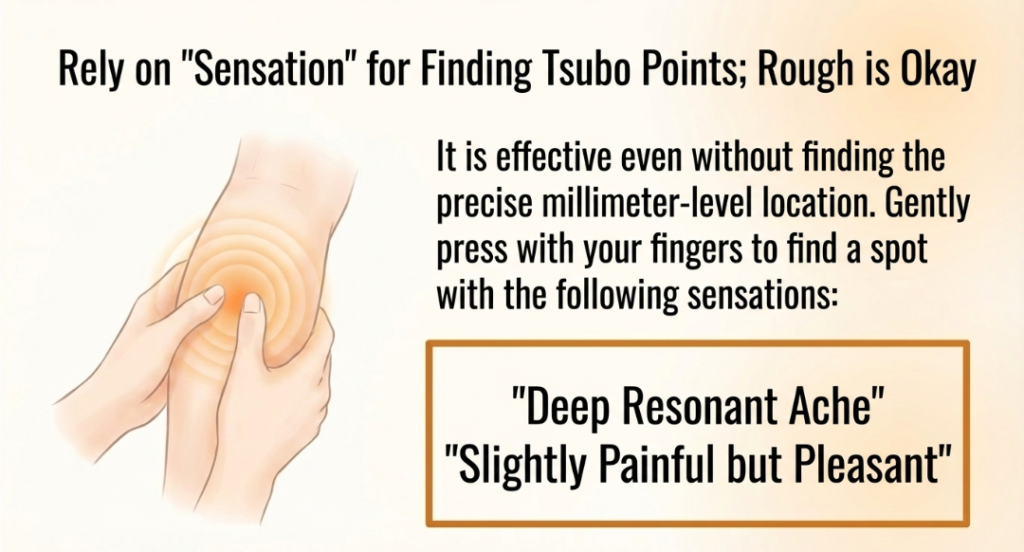
You don’t need to locate them with millimeter precision. Gently press around the area and look for a spot that feels “deeply responsive” or pleasantly tender.
Safe At-Home Moxibustion: Method and Steps
If you want to practice self-care at home, the easiest and safest choice is a stand-type moxa with a base, which keeps the burning moxa from directly touching the skin. It’s simple even for beginners.
First, lightly mark the acupoint with a pen or similar object. Next, peel off the backing from the adhesive base of the moxa, light the tip, and gently place it on the point. Then relax and wait until the smoke stops, usually about 3 to 5 minutes. When finished, make sure the fire is completely out and discard it in an ashtray or container with water.
Is Daily Moxibustion Too Much? Proper Frequency and Timing
It’s natural to want quick relief, but doing moxibustion many times a day right from the start is not recommended. Too much stimulation may cause a kind of fatigue reaction sometimes referred to as “moxa overload.”
Start with once a day and observe how your body responds. Once you get used to it, you may increase to twice a day, morning and evening. However, avoid using moxibustion within 30 minutes before or after bathing, immediately after intense exercise, or after drinking alcohol, since the skin may be more sensitive and circulation may change too abruptly.
Avoiding Marks from Moxibustion: What to Do If It Feels Too Hot
If you want to keep your calves looking smooth and clear, you definitely want to avoid any burn marks. The most important rule for preventing marks is simple: do not endure excessive heat.
You do not need to let the moxa burn all the way down. Once you feel sufficient warmth, it is often said that the effect has already begun. If it starts to feel sharply or unpleasantly hot, remove it immediately by gently lifting the edge of the base. If you are uneasy about smoke or fire, using a smokeless or heat-generating sheet-type moxa can also be a smart option.
Combining Moxibustion and Massage for Better Swelling Relief

When gentle massage or stretching is added after moxibustion has warmed the area and improved circulation, the combined effect may help your legs feel even lighter and more refreshed.
A recommended method is to gently stroke upward from the ankles toward the backs of the knees, similar to lymphatic drainage. Be careful not to rub too hard or dig into the tissue forcefully. When pressing acupoints, exhale and apply pressure slowly for 3 to 5 seconds, only to a “pleasantly sore” degree. Even a simple Achilles tendon stretch after moxibustion can help activate the calf muscle pump.
Improve Calf Swelling at the Root with Daily Moxibustion
In this article, I’ve shared a wide range of information on caring for calf swelling with moxibustion, from causes and mechanisms to specific acupoints and safe techniques.
Swelling doesn’t develop overnight, and meaningful improvement usually comes from daily consistency. If you’ve been researching topics like moxibustion, calves, and swelling, you are already taking an important step toward caring well for your body. Start at a comfortable pace and enjoy your moxibustion routine within a range that feels good to you. When your legs feel lighter, your whole day can start to feel brighter too.

コメント